Small Batch Turtle Cheesecake
This Post May Contain Affiliate Links. Please Read Our Disclosure Policy.
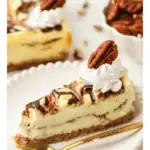
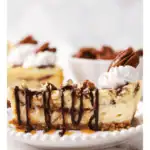
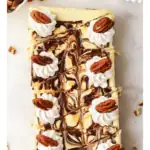
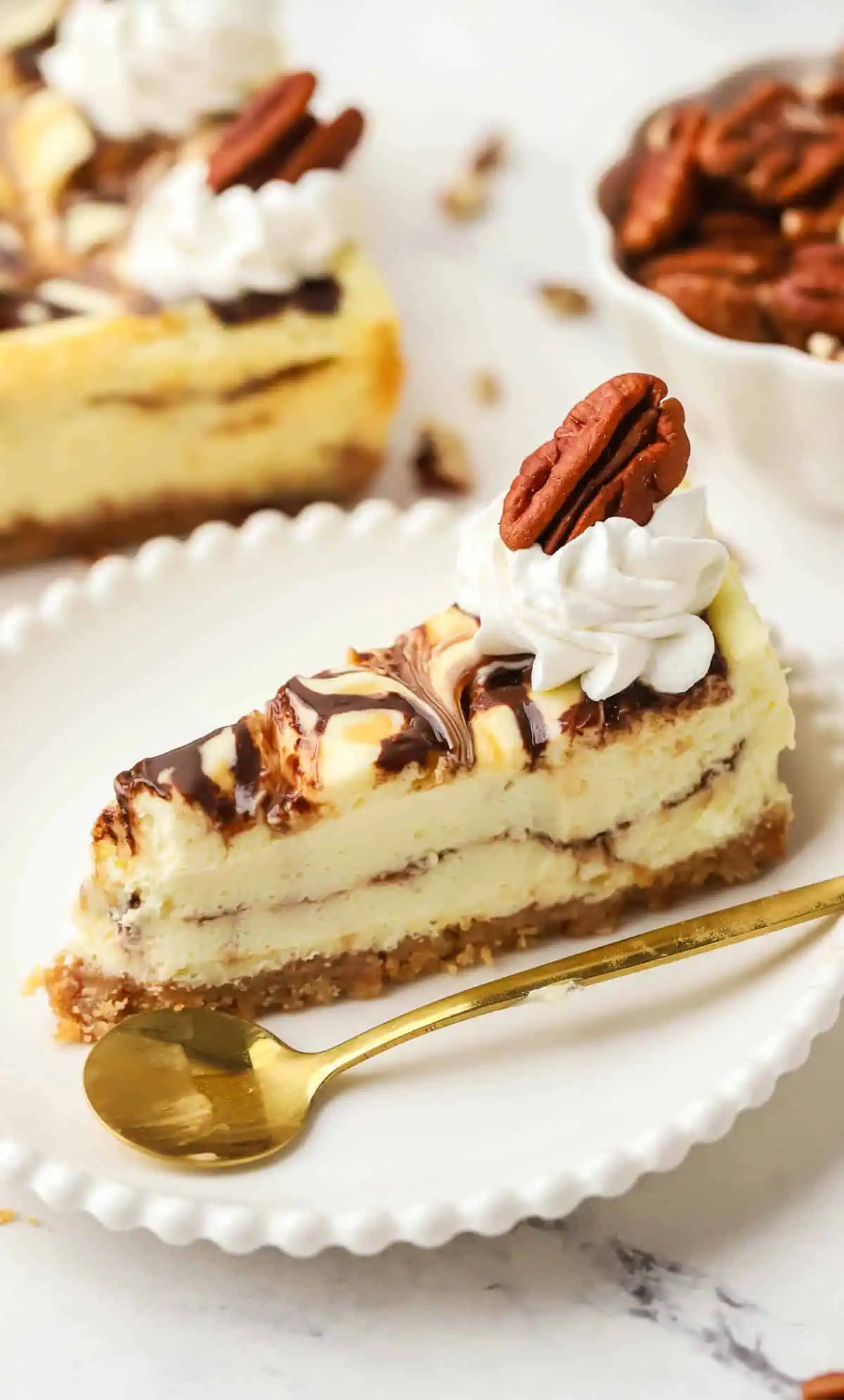
This small batch turtle cheesecake has everything you love about classic turtle desserts packed into a creamy cheesecake baked right in a loaf pan. It starts with a buttery graham cracker crust, then gets layers of creamy cheesecake, gooey caramel, and rich hot fudge before being finished with toasted pecans.
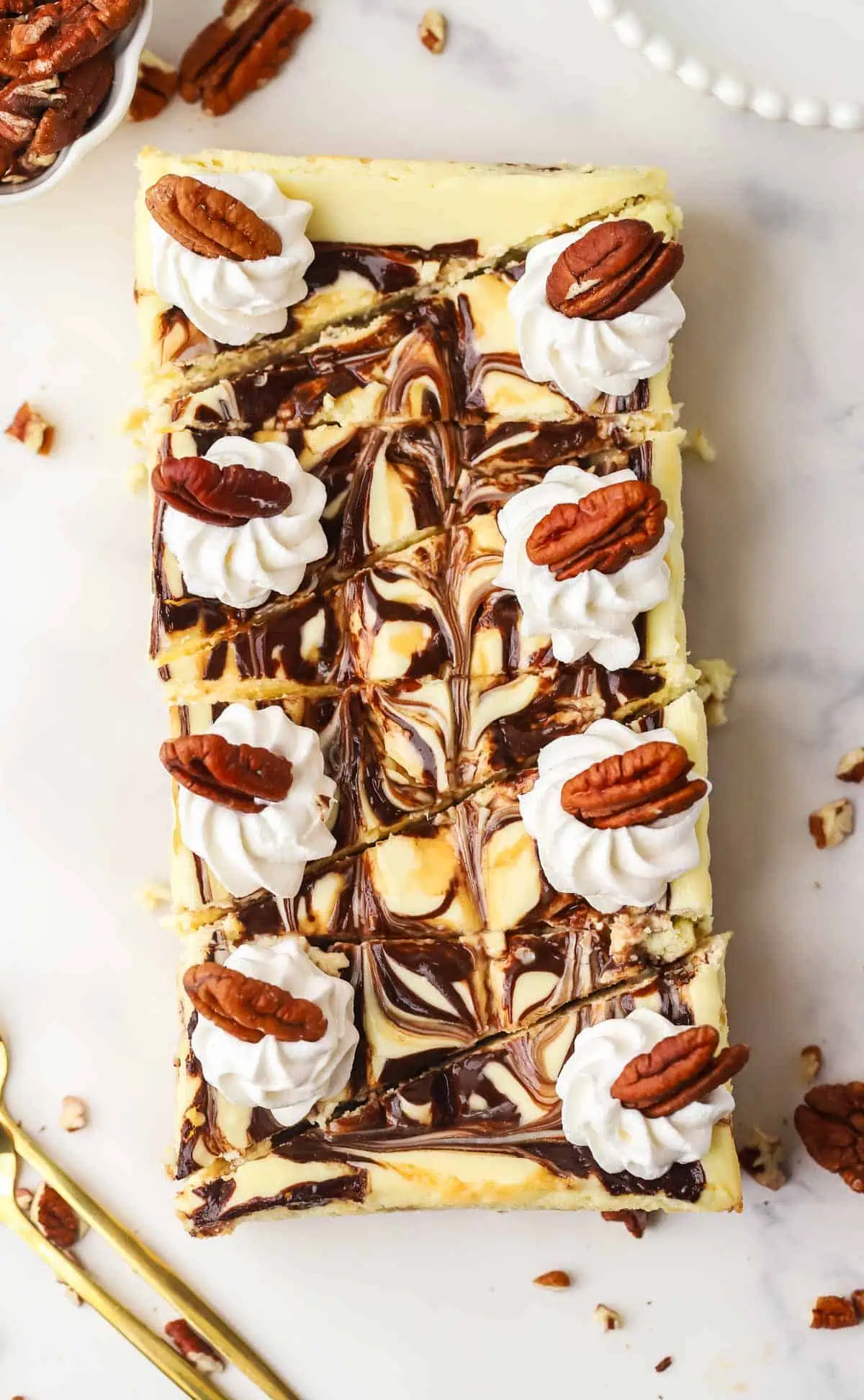
I love my full-size Turtle cheesecake, but sometimes I just don’t need that much dessert hanging around! That’s why I created this small batch version.
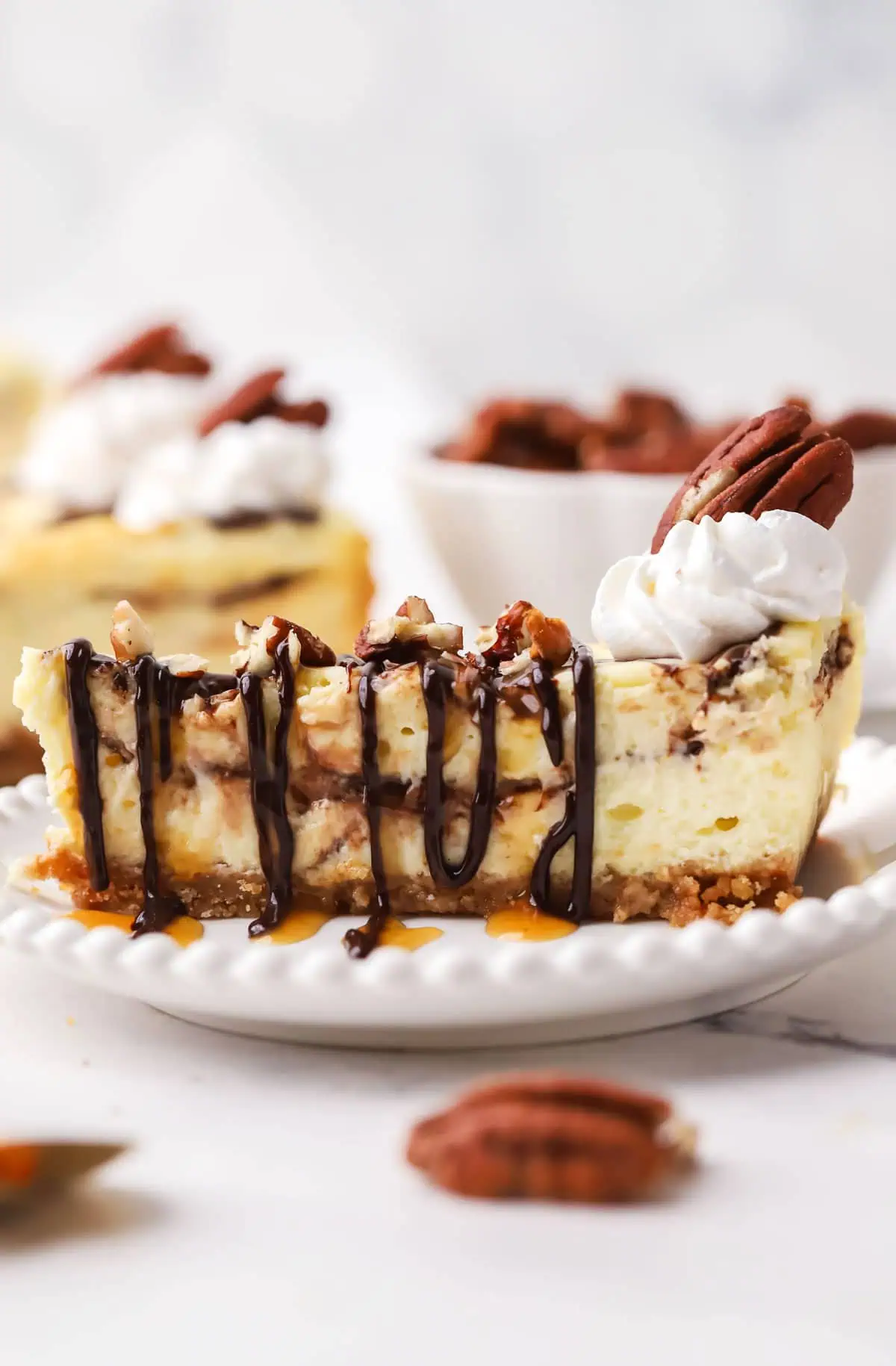
I started with my small batch cheesecake recipe and swirled in hot fudge and caramel sauce, then topped with toasted, chopped pecans for that classic turtle flavor. Baking cheesecake in a loaf pan gives you plenty to share while keeping the recipe much more manageable than a traditional 9-inch cheesecake.
I also use sour cream in the filling because it keeps the cheesecake creamy and gives it just enough tang to balance all that sweet caramel and chocolate. Best of all, you don’t need a water bath for this cheesecake. Just bake, cool, chill, and decorate!
Why This Recipe Works
- A loaf pan makes the perfect small batch cheesecake. You get the same thick, creamy cheesecake texture as a full-size version without making an entire 9-inch cheesecake.
- Sour cream keeps the filling extra creamy. It also adds a little tanginess that balances the sweetness of the caramel and hot fudge.
- The caramel and hot fudge are layered throughout. Swirling them into the middle and top of the cheesecake means you get turtle flavor in every slice instead of just in the topping.
- There’s no water bath required. Baking the cheesecake at a low 325°F temperature helps it bake gently and evenly without the extra step of setting up a water bath.
- Toasted pecans add crunch and flavor. Toasting the pecans brings out their nutty flavor and gives you a nice contrast to the creamy cheesecake and gooey sauces.
Ingredients
For the graham cracker crust
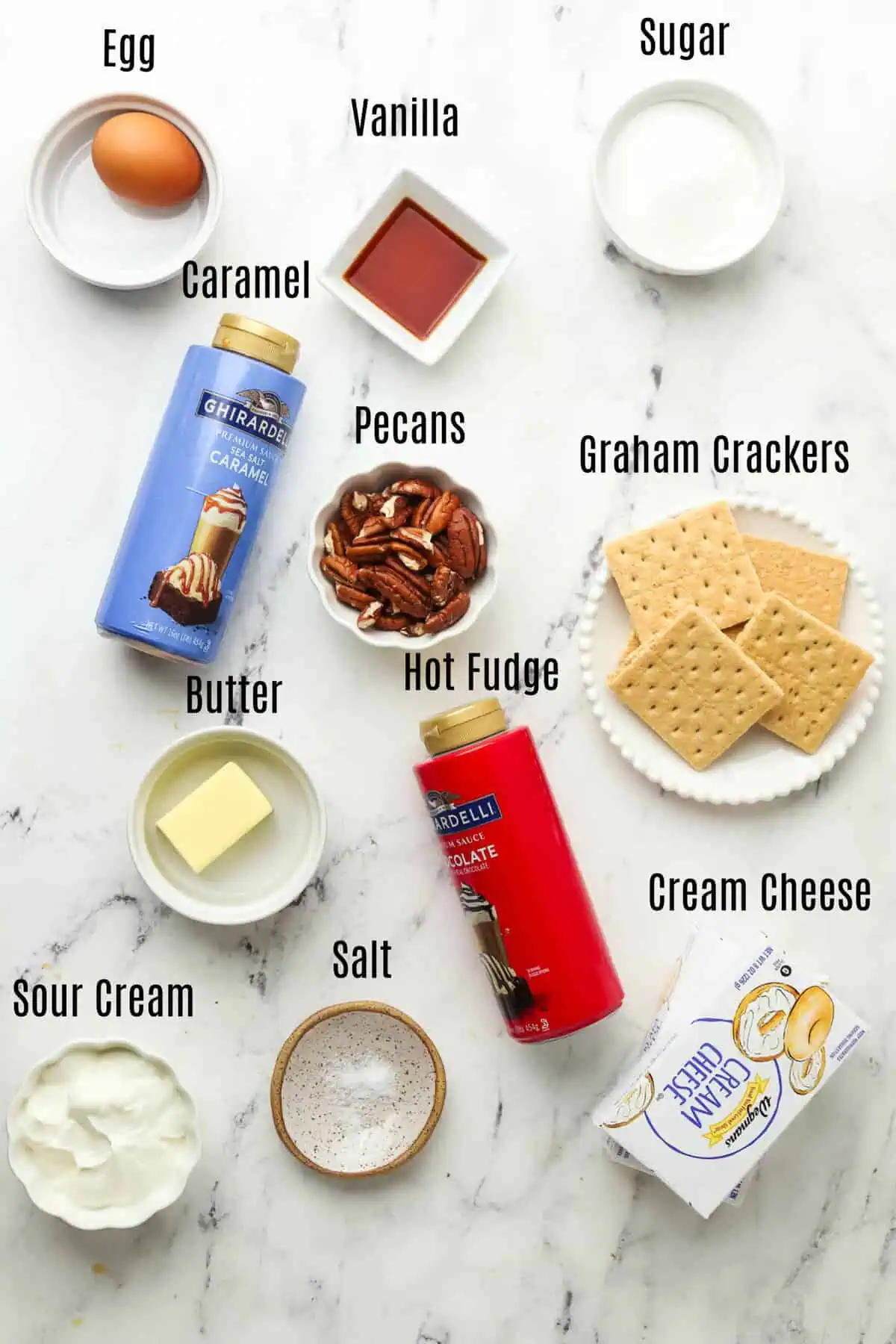
- Graham crackers: You can swap and use Nilla wafers or digestive biscuits if need be. Pulse them into fine crumbs so the crust holds together when sliced.
- Granulated sugar: You can also use brown sugar. Brown sugar will give a softer crust.
- Unsalted butter: Salted butter also works.
For the turtle cheesecake filling
- Cream cheese: Use full-fat, block-style cream cheese and let it soften to room temperature. Avoid whipped or tub-style cream cheese.
- Granulated sugar
- Salt
- Vanilla extract
- Egg: Let the egg come to room temperature so it blends easily into the filling. I like to place in bowl of warm water for 10 minutes. Read How To Get Room Temperature Eggs Fast.
- Sour cream: Use full-fat sour cream at room temperature for the creamiest cheesecake texture. Plain Greek Yogurt also works.
- Hot fudge: If your fudge sauce is very thick, warm it briefly so it’s easier to drizzle and swirl. Store-bought or homemade works.
- Caramel sauce: Homemade or store-bought caramel sauce will work.
- Pecans: I recommend toasting the pecans before chopping them for even more flavor. Read How To Toast Pecans
How To Make Small Batch Turtle Cheesecake
1. Prepare your pan and oven.
Preheat the oven to 325°F (160°C) with a rack positioned in the center of the oven.
Line a 9×5-inch loaf pan with parchment paper, leaving enough overhang on the sides to lift the chilled cheesecake out later. You can simply grease the pan instead, but parchment makes removing and slicing the cheesecake much easier.
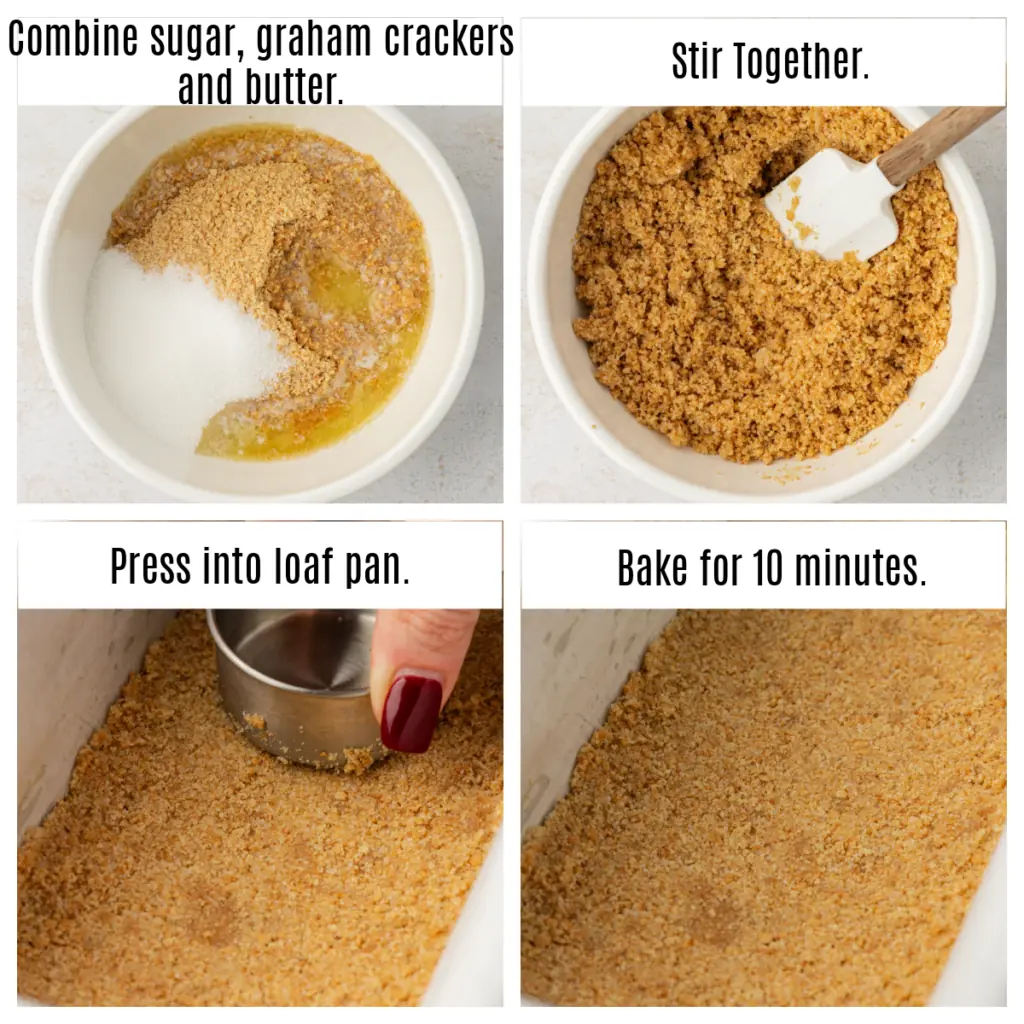
2. Make the graham cracker crust.
Pulse the graham crackers in a food processor or blender until you have fine crumbs. Stir the crumbs together with the sugar and melted butter until everything is evenly moistened.
Press the mixture firmly into the bottom of the prepared loaf pan. You want an even, compact layer so the crust doesn’t crumble when you slice the cheesecake, but don’t pack it down excessively or it can become too hard.
3. Bake the crust.
Place the loaf pan on a baking sheet and bake the crust for 10 minutes.
Pre-baking helps set the crust before you add the wet cheesecake filling, giving you a sturdier base and a better texture.
Remove the crust from the oven and let it cool while you prepare the filling. Keep the oven set to 325°F.
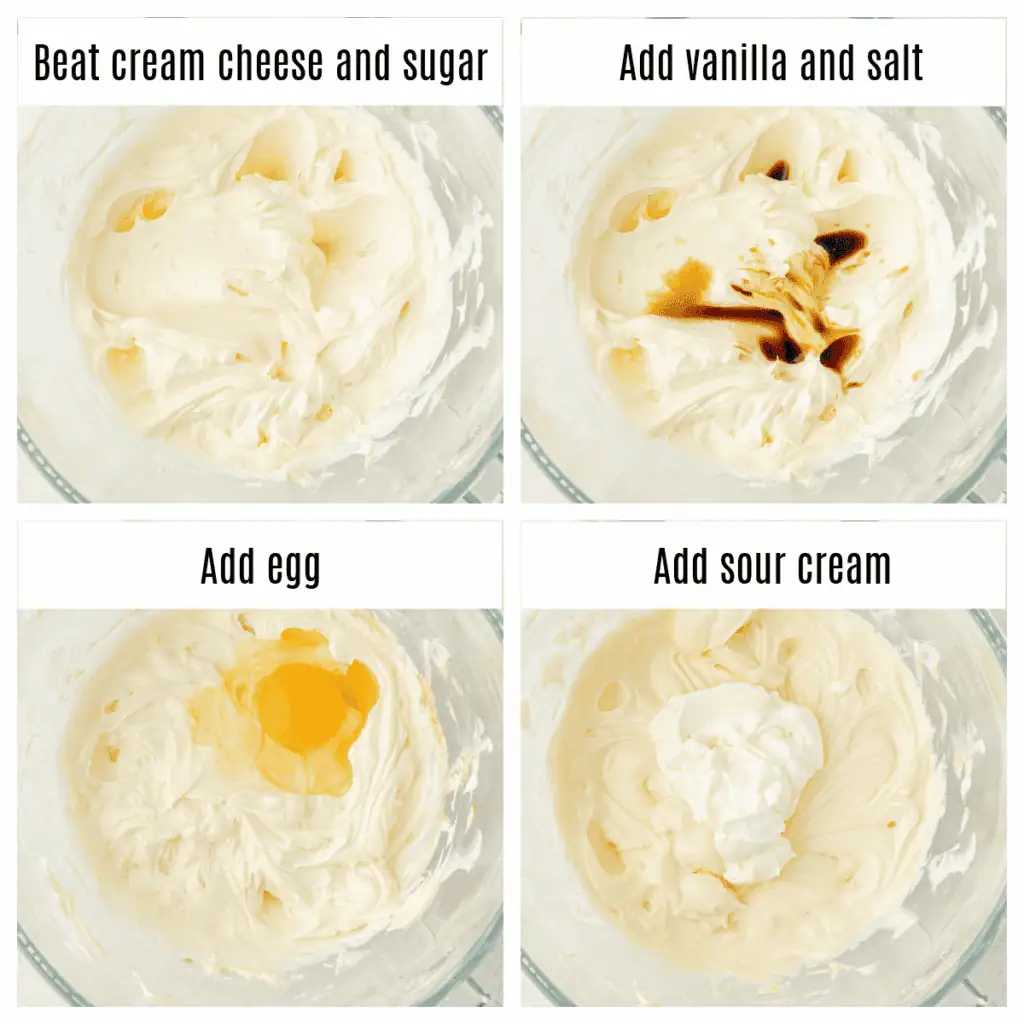
4. Beat the cream cheese and sugar.
In the bowl of a stand mixer fitted with the paddle attachment, beat the softened cream cheese and granulated sugar on medium speed for about 2 to 3 minutes until smooth.
Starting with properly softened cream cheese is important here. Cold cream cheese won’t blend as smoothly and can leave you with little lumps throughout your filling.
5. Finish the cheesecake filling.
Beat in the salt and vanilla extract.
Add the egg and mix just until incorporated, then add the sour cream and mix until combined. Scrape down the sides and bottom of the bowl to make sure there aren’t any pockets of cream cheese hiding underneath.
Once the egg has been added, avoid beating the filling longer than necessary. Incorporating too much air into cheesecake batter can cause it to puff up in the oven and then sink or crack as it cools.
6. Layer the cheesecake.
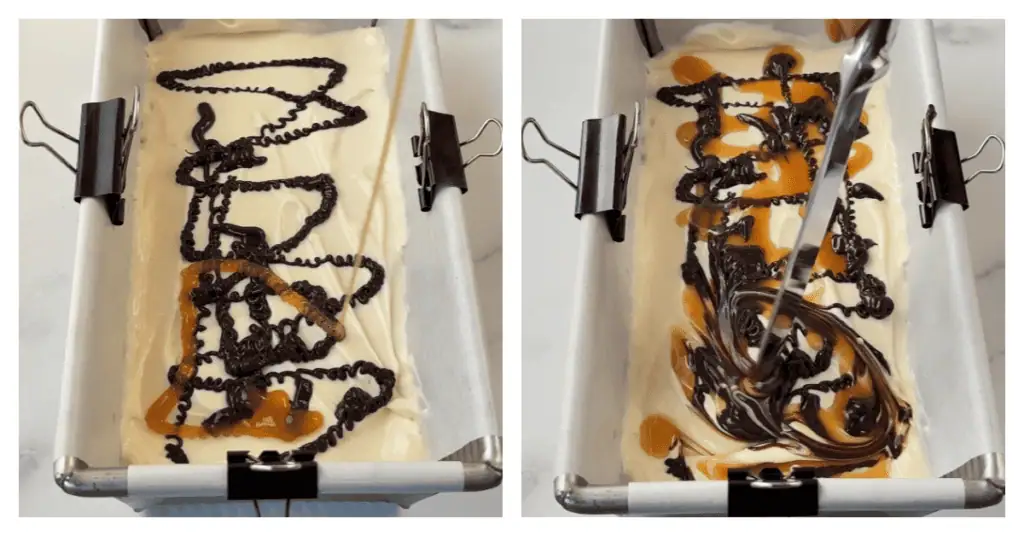
Pour half of the cheesecake filling over the cooled graham cracker crust and spread it into an even layer.
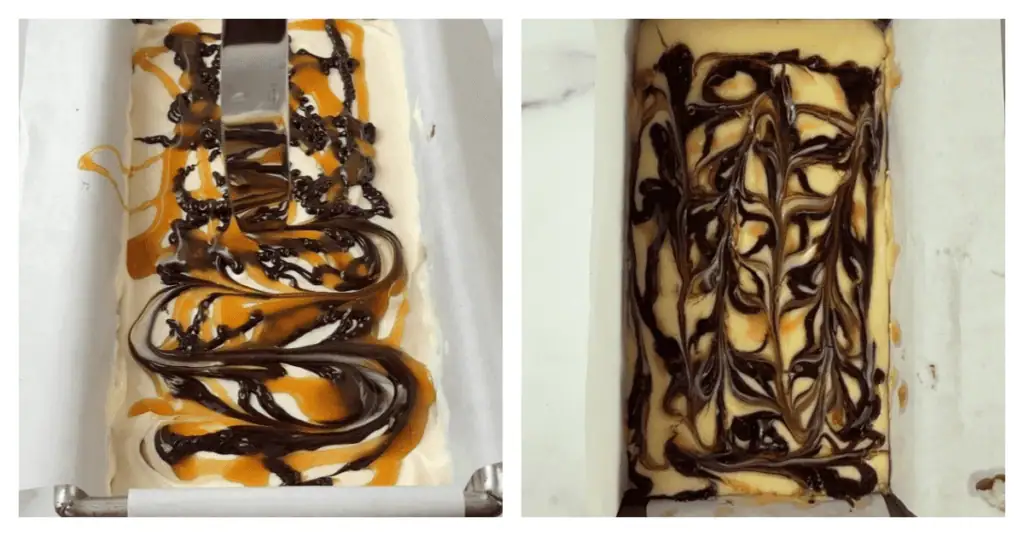
Drizzle about 1 tablespoon each of the hot fudge and caramel sauce over the batter. Use the tip of a knife to gently swirl the sauces through the filling.
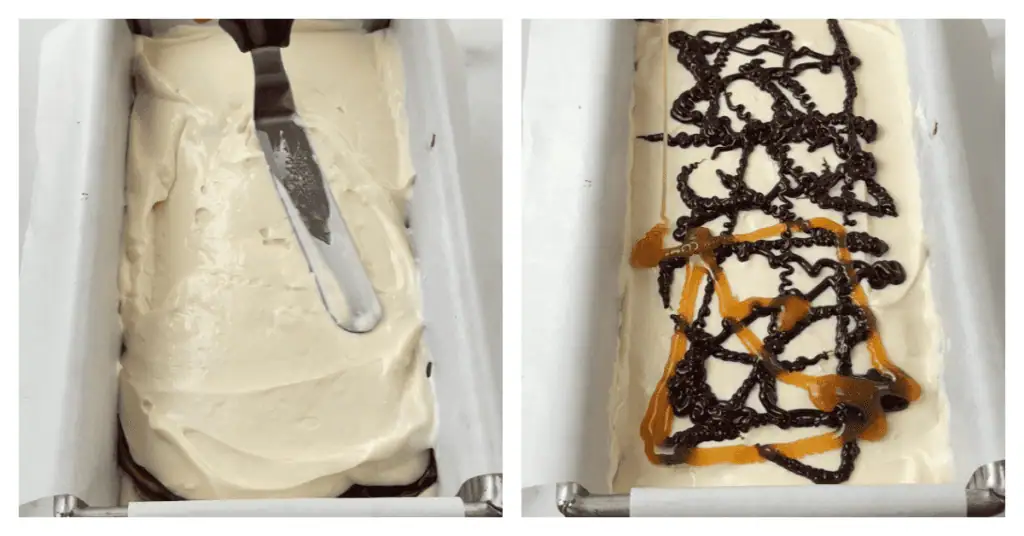
Pour the remaining cheesecake batter on top and smooth it out. Drizzle another tablespoon each of hot fudge and caramel sauce over the top and gently swirl again.
Don’t get too aggressive with the swirling. A few passes with the knife are all you need to create ribbons of chocolate and caramel without completely mixing them into the cheesecake.
7. Bake the cheesecake.
Bake at 325°F for 35 to 40 minutes.
You’ll know the cheesecake is ready when the edges look set and may be very lightly golden, but the center still has a slight wobble when you gently shake the pan. Don’t wait until the entire cheesecake looks completely firm. The center will continue to set as it cools.
Remove the cheesecake from the oven and carefully run a thin knife around any edges touching the pan. This allows the cheesecake to contract as it cools instead of sticking to the sides, which can contribute to cracking.
8. Cool and chill.
Let the cheesecake cool completely in the pan on a wire rack.
Once cooled, transfer it to the refrigerator and chill for at least 4 hours. Don’t rush the chilling time. This is when the filling fully sets and develops that dense, creamy cheesecake texture.
9. Decorate and serve.
When you’re ready to serve, run a knife around the edges of the cheesecake if needed. If you lined the pan with parchment paper, use the overhang to carefully lift the cheesecake from the pan.
Drizzle the remaining hot fudge and caramel sauce over the top, then sprinkle with toasted chopped pecans.
For clean slices, use a sharp knife and wipe the blade clean between each cut.
Recipe Tips
- Use room-temperature ingredients. Room-temperature cream cheese, egg, and sour cream blend together much more easily, giving you a smooth cheesecake filling without lumps.
- Do not overmix after adding the egg. Too much air in the batter can cause the cheesecake to rise too quickly in the oven and then crack or sink as it cools.
- Don’t overbake the cheesecake. The edges should look set, but the center should still wobble slightly when you remove it from the oven. It will continue to set as it cools.
- Warm thick hot fudge before swirling. You want the fudge to be fluid enough to swirl easily through the batter without dragging through the cheesecake filling.
- Give the cheesecake the full chilling time. Chill it for at least 4 hours before slicing so the filling has enough time to completely set.
How To Store Turtle Cheesecake
Because this cheesecake contains cream cheese, sour cream, and egg, it should not be stored at room temperature for extended periods. It can sit out while serving, but return leftovers to the refrigerator within about 2 hours.
Store leftover turtle cheesecake covered in the refrigerator for up to 4 to 5 days. For the neatest storage, wait to add extra caramel, hot fudge, and pecans until serving.
You can also freeze the baked cheesecake. For individual servings, cut the chilled cheesecake into slices and wrap each slice tightly in plastic wrap, then place them in a freezer-safe container or bag. Freeze for up to 2 months. Thaw overnight in the refrigerator before serving.
Unlike cookie recipes, this cheesecake does not have a dough that can be frozen and baked later. However, the baked cheesecake freezes very well, making it a great make-ahead dessert. Label the container with the recipe name and date before freezing so you know exactly what you have tucked away.
Recipe FAQs
Cheesecake can crack if the batter is overmixed, especially after adding the egg, or if the cheesecake is overbaked. Mix the egg in only until combined and remove the cheesecake from the oven while the center still has a slight wobble. Running a knife around the edges after baking also allows the cheesecake to contract as it cools without pulling against the sides of the pan.
Look at the edges and center rather than relying only on the baking time. The edges should look set and may be slightly golden, while the center should still have a slight wobble when you gently shake the pan. If the center is completely firm when it comes out of the oven, the cheesecake may be overbaked.
Your cream cheese was most likely too cold. Let the cream cheese soften completely to room temperature before mixing it with the sugar. The egg and sour cream should also be at room temperature so everything blends together smoothly.
More Recipes To Try
If you loved this small batch turtle cheesecake, here are a few more small batch desserts and cheesecake recipes to bake next:
- Mini Cheesecakes: Individual cheesecakes with a buttery graham cracker crust that are easy to make and serve.
- Small Batch Brownies: Rich, fudgy brownies when you’re craving chocolate but don’t need a whole pan.
- Mini Chocolate Cake: A rich, moist 6-inch chocolate cake that’s just the right size for a smaller celebration.
- Small Batch Cookie Bars: Soft and chewy chocolate chip cookie bars baked in a loaf pan for an easy small batch treat.
Small Batch Turtle Cheesecake
Ingredients
For the crust:
- 6 graham cracker sheets 42 g
- 2 Tablespoons granulated sugar or brown sugar
- 3 tablespoons unsalted butter melted
For the cheesecake filling:
- 16 ounces (2 blocks) cream cheese softened to room temperature
- ½ cup (100 g) granulated white sugar
- pinch salt
- 1 teaspoon vanilla extract
- 1 large egg room temperature
- ½ cup (120 g) sour cream room temperature
- ¼ cup hot fudge
- ¼ cup caramel sauce
- Toasted, chopped pecans for sprinkling on top
Instructions
Make crust
- Prep oven. Preheat oven to 325°F (160°C) , with rack in middle of oven.
- Make the cookie crust. Pulse the graham crackers in a food processor or blender until finely ground. Put in a large bowl, and stir in the sugar and melted butter. 6 graham cracker sheets 2 Tablespoons granulated sugar 3 tablespoons unsalted butter melted
- Assemble the cookie crust. Press the crumb mixture firmly into the bottom of a 9×5 loaf pan.
- Bake the crust. Place the pan on a baking sheet and bake for 10 minutes. Remove from the oven and let cool.
Make cheesecake filling
- Combine cream cheese and sugar. In the bowl of a stand mixer, fitted with a paddle attachment beat cream cheese and sugar on medium speed for 2-3 minutes. 16 ounces (2 blocks) cream cheese ½ cup (100 g) granulated white sugar
- Add remaining ingredients. Add the salt and vanilla, beating after each addition. Beat in the the egg. Add the sour cream, beat until combined. Scrape down the sides of the bowl and along the bottom to make sure all of the cream cheese has been incorporated. pinch salt 1 teaspoon vanilla extract 1 large egg ½ cup (120 g) sour cream
- Assemble the cheesecake. Pour half of the cheesecake batter over the graham cracker crust. Drizzle a tablespoon of hot fudge and caramel sauce. Swirl with the tip of the knife. Pour the remaining batter on top and spread into an even layer. Top with another tablespoon each of hot fudge, and caramel sauce. Swirl with the tip of knife.
- Bake the cheesecake. Bake at 325°F (160°C) for 35-40 minutes until the edges of the cheesecake are set and slightly golden brown, and the middle of the cheesecake is set but still slightly wobbly. Remove from the oven and run a knife around the edges to loosen this will help prevent cracks as it cools.
- Cool the cheesecake. Allow the cheesecake to cool in the pan on a wire rack. Transfer to the fridge and chill for 4 hours.
- Serving the cheesecake. When ready to serve, run a knife around the edges of the loaf pan to loosen the cheesecake, or if using parchment paper, carefully lift it out using the parchment overhang. Drizzle on the remaining hot fudge and caramel sauce. Sprinkle on the chopped pecans. Slice and serve.
Notes
- Cream cheese: Use two 8-ounce blocks of full-fat cream cheese. Tub-style or whipped cream cheese can produce a softer filling.
- Sour cream: Full-fat sour cream gives the cheesecake the best creamy texture. Plain Greek Yogurt can also be used.
- Caramel and hot fudge: Homemade or store-bought sauces both work. Save some of each for decorating the chilled cheesecake.
- Graham crackers: Nilla wafers or digestive biscuits can also be used.
- Unsalted butter: Salted butter also works.
- Storage: Keep covered in the refrigerator for up to 4 to 5 days.
- Freezing: Freeze the undecorated cheesecake or individual slices for up to 2 months. Thaw overnight in the refrigerator, then add caramel, hot fudge, and pecans before serving.