Cinnamon Raisin Bread
This Post May Contain Affiliate Links. Please Read Our Disclosure Policy.
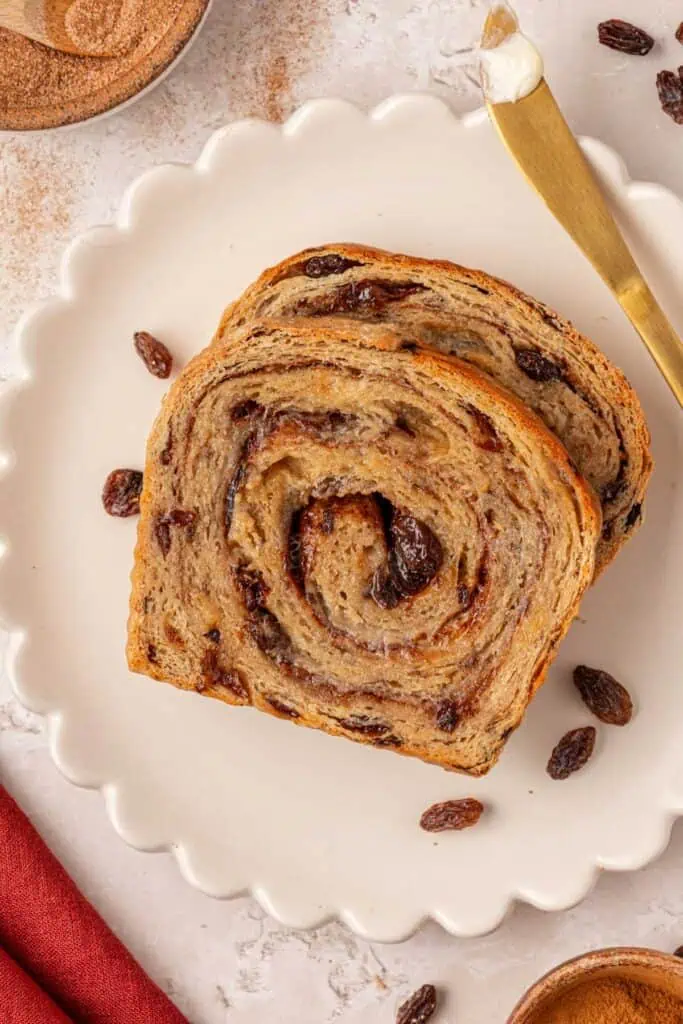
This cinnamon raisin bread is soft, fluffy, and lightly sweet with a swirl of cinnamon sugar running through every slice. It’s perfect for toast, sandwiches, or just warm with a little honey butter. If you love bakery-style cinnamon raisin bread, this homemade version is even better.
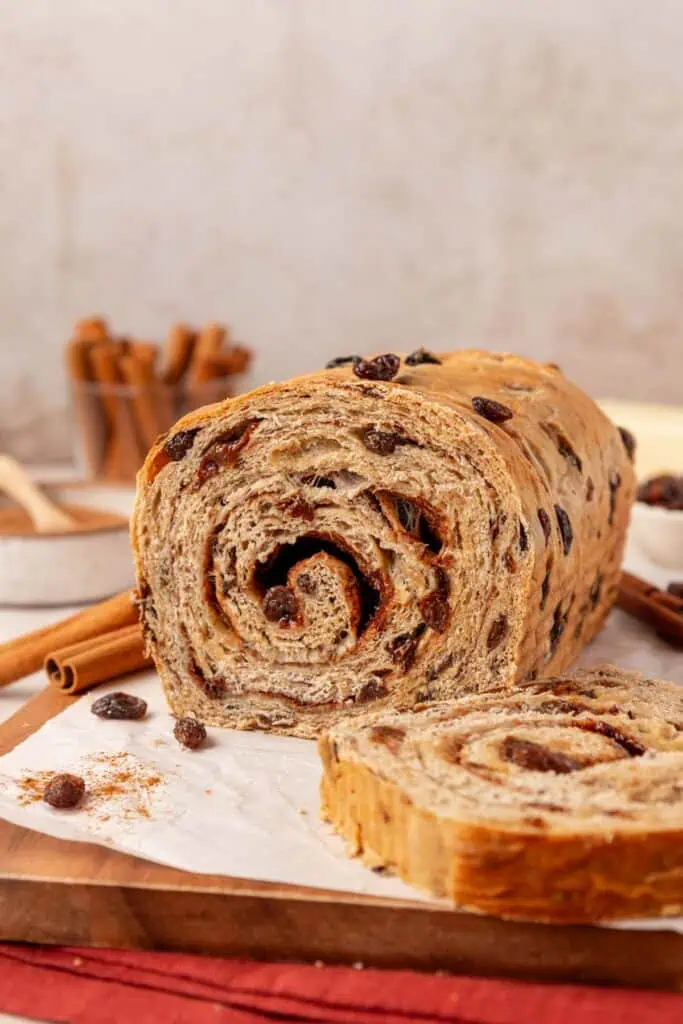
I love a good cinnamon bread, like my cinnamon swirl quick bread or raisin bread. But nothing beats a loaf of yeast bread. I started testing this recipe because I wanted a cinnamon raisin bread that that perfect slice for toast in morning – with that perfect swirl and sweet raisins throughout.
A lot of recipes lean more toward a dense loaf, and I wanted something lighter, fluffier, and more versatile for everyday use.
After a few rounds of testing, I found that the key was using a simple enriched dough and getting the hydration just right so the bread stays soft but still holds its shape. I also tested using both butter and oil, and while both work, I prefer butter for the flavor—it gives the bread a richer taste that pairs perfectly with the cinnamon swirl.
Ingredients You’ll Need
For the raisins:
- Raisins: soak in hot water to plump them up and keep them from drying out the dough
- Boiling water: helps soften the raisins quickly
For the dough:
- Bread flour: gives structure and a soft, chewy texture. All-purpose flour works as well but the loaf may not bake up as tall and the dough will be harder to work with.
- Sugar
- Instant yeast: You can use active dry yeast but the rising times will be longer.
- Salt
- Milk: Warmed to help activate the yeast and create a soft crumb. Whole milk is best for a tender crumb.
- Water: Warm (not too hot)
- Unsalted butter: Salted butter or oil can be substituted.
For the cinnamon swirl:
- Granulated sugar
- Cinnamon
- Egg white: helps the filling stick and prevents gaps in the swirl
How To Make Cinnamon Raisin Bread
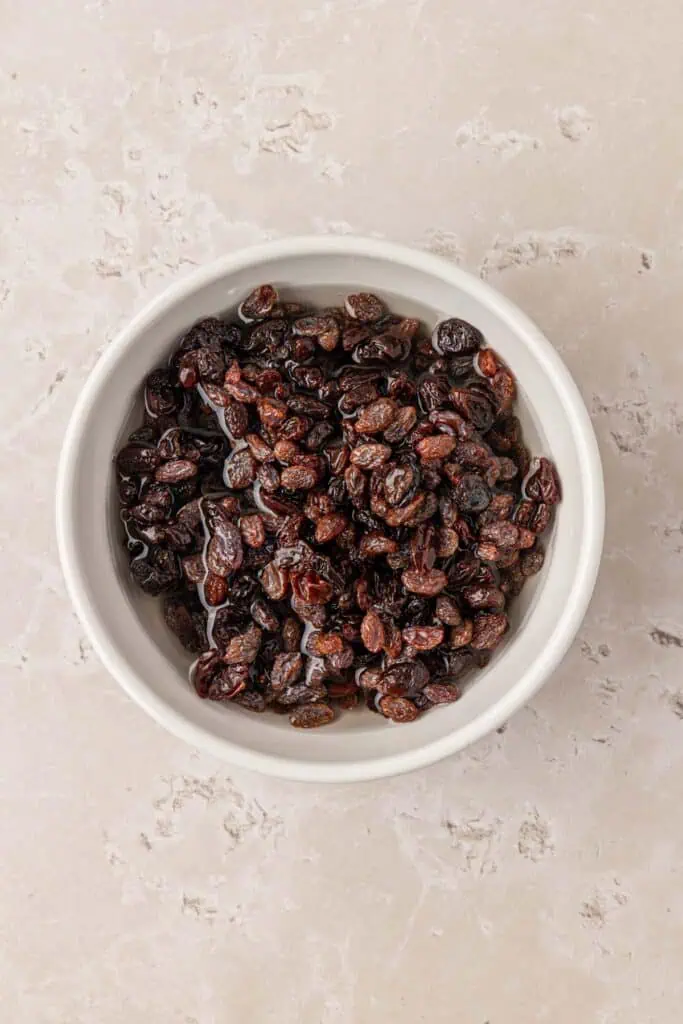
Start by soaking your raisins in boiling water for about 5 minutes. This step is important—it keeps the raisins soft and prevents them from pulling moisture out of the dough as it rises. Drain them well and blot dry before adding to the dough.
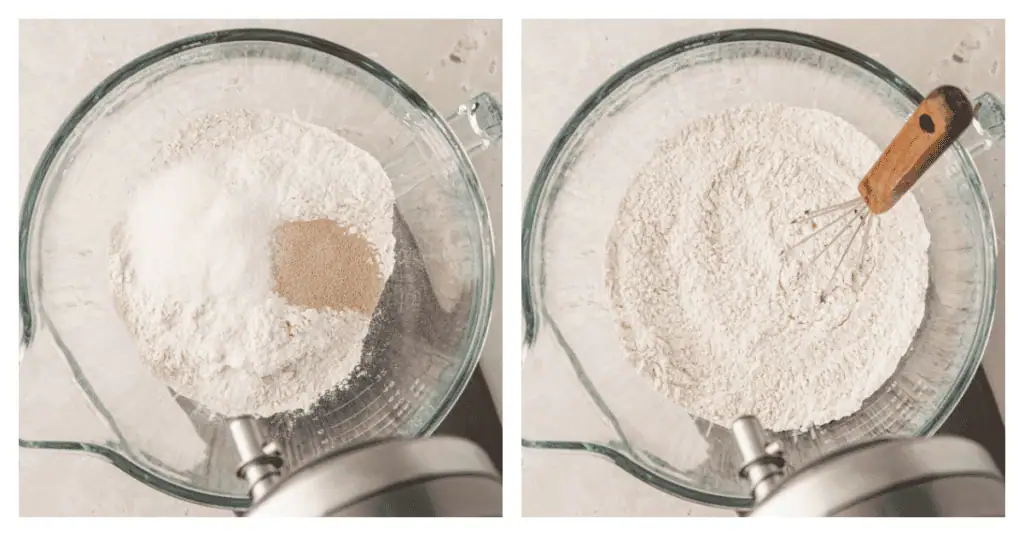
In a large bowl, combine your flour, sugar, yeast, and salt. Mixing these first ensures the yeast is evenly distributed and the salt doesn’t interfere with its activity.
Add in the warm milk, warm water, and melted butter, and stir until a shaggy dough forms.
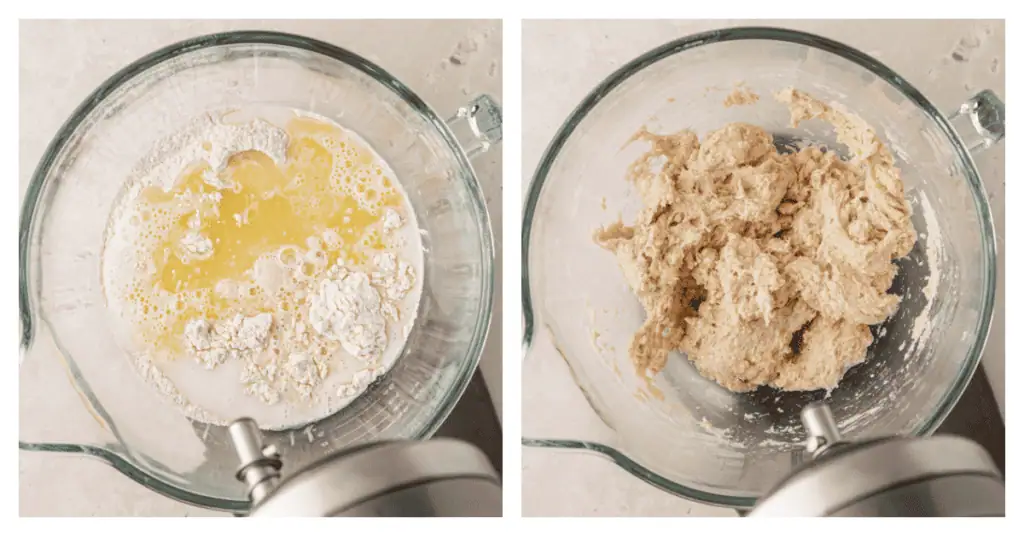
At this stage, the dough will look a little rough—that’s normal. Once combined, stir in the raisins so they’re evenly distributed.
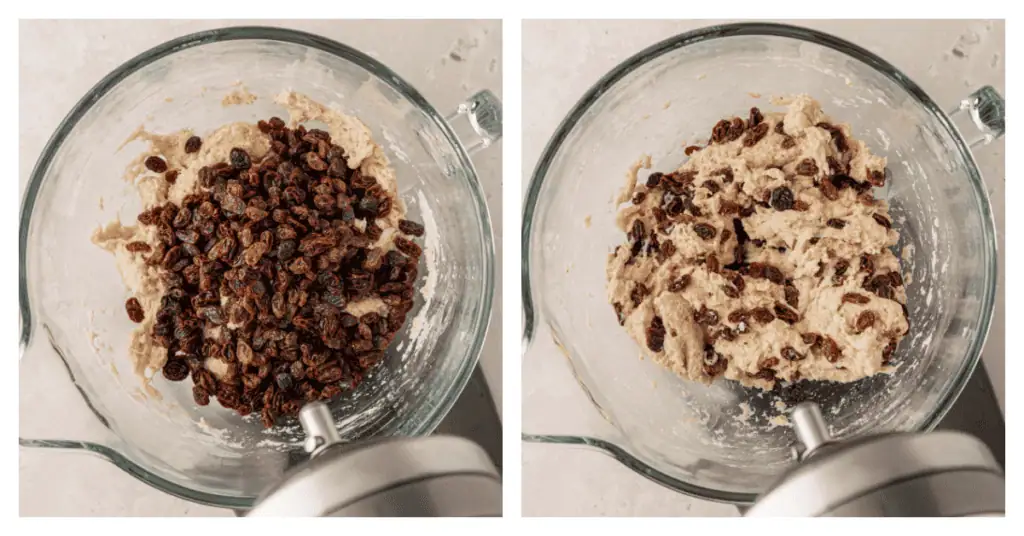
Knead the dough using a stand mixer or by hand until it becomes smooth and slightly sticky. This usually takes about 6–8 minutes in a mixer or 8–10 minutes by hand. You’re looking for a dough that pulls away from the sides of the bowl, sticks to the bottom of the bowl, but still feels soft to the touch. This is what gives you that fluffy texture.
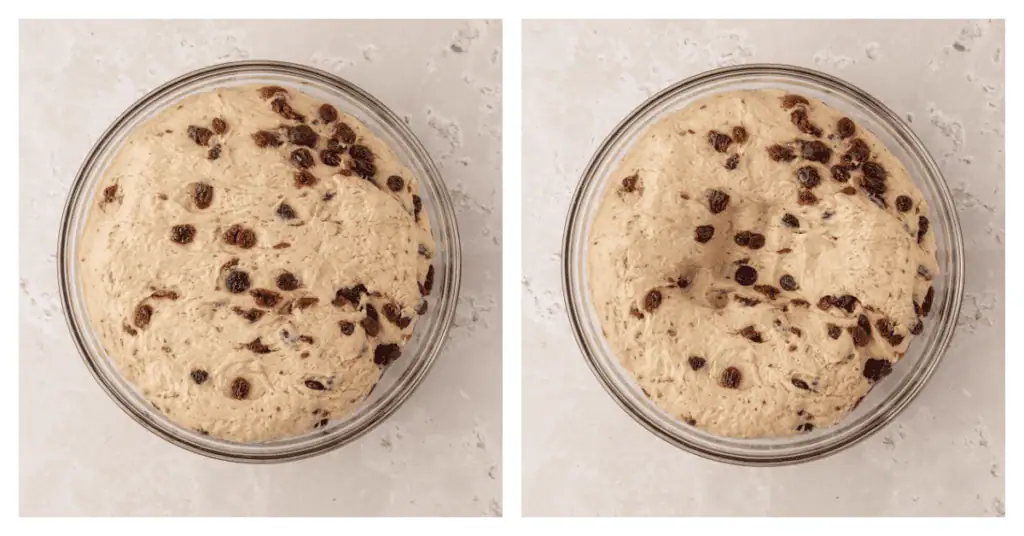
Place the dough into a lightly greased bowl, turning it once to coat, then cover and let it rise until doubled in size.
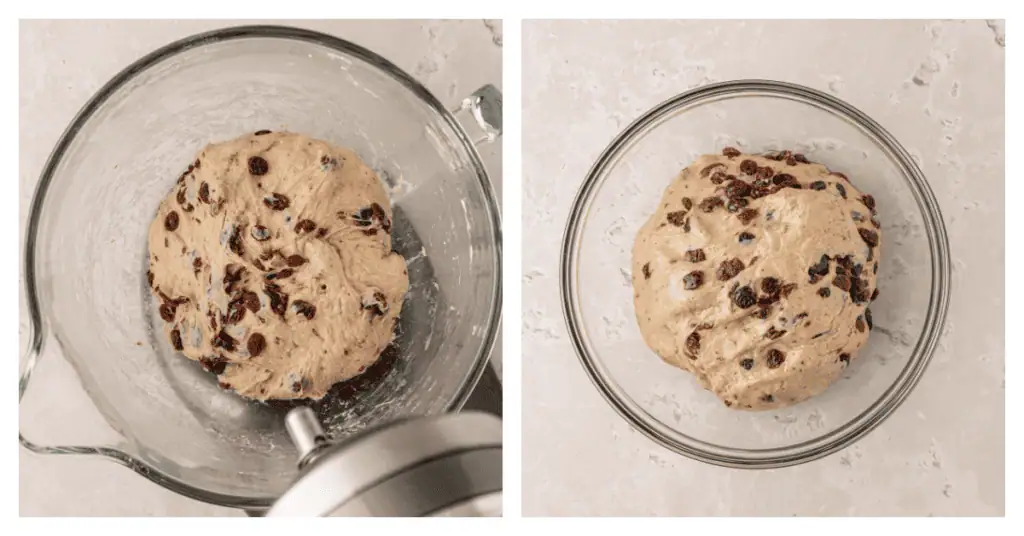
This first rise builds structure and flavor, so don’t rush it—depending on your kitchen temperature, this can take 45 minutes to an hour.
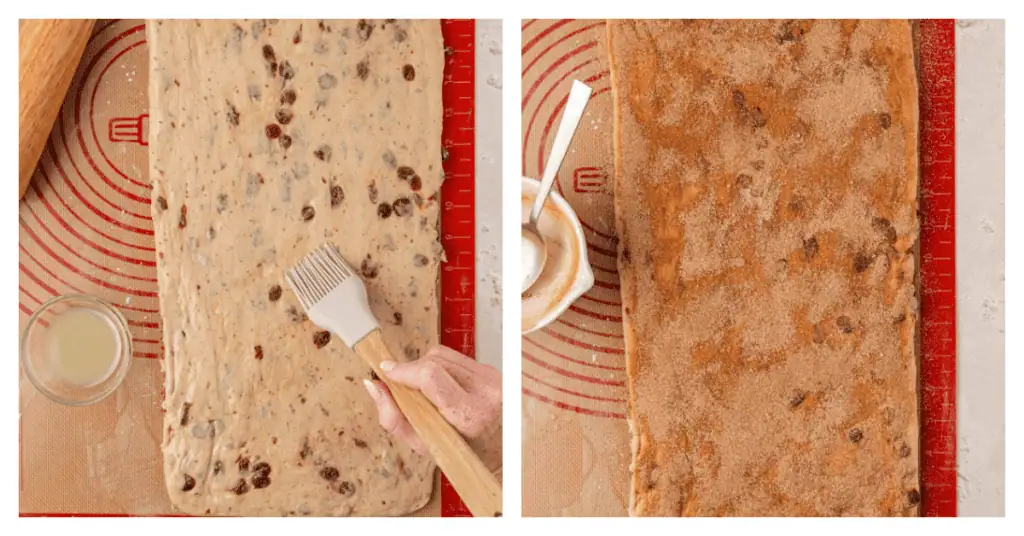
Once risen, gently punch the dough down and turn it out onto a lightly floured surface. Roll it into a rectangle about 8 by 20 inches. Keeping the shape even helps create a uniform swirl in the final loaf.
Brush the surface with the egg white—this helps the cinnamon sugar stick and prevents gaps from forming between the layers. Sprinkle the cinnamon sugar evenly over the dough, leaving a small border at one edge so the seam seals properly.
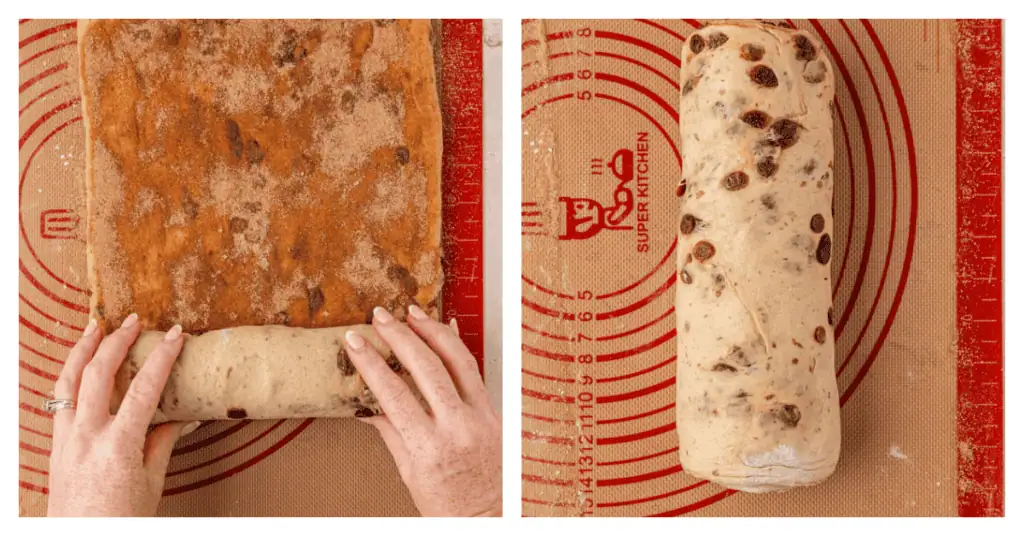
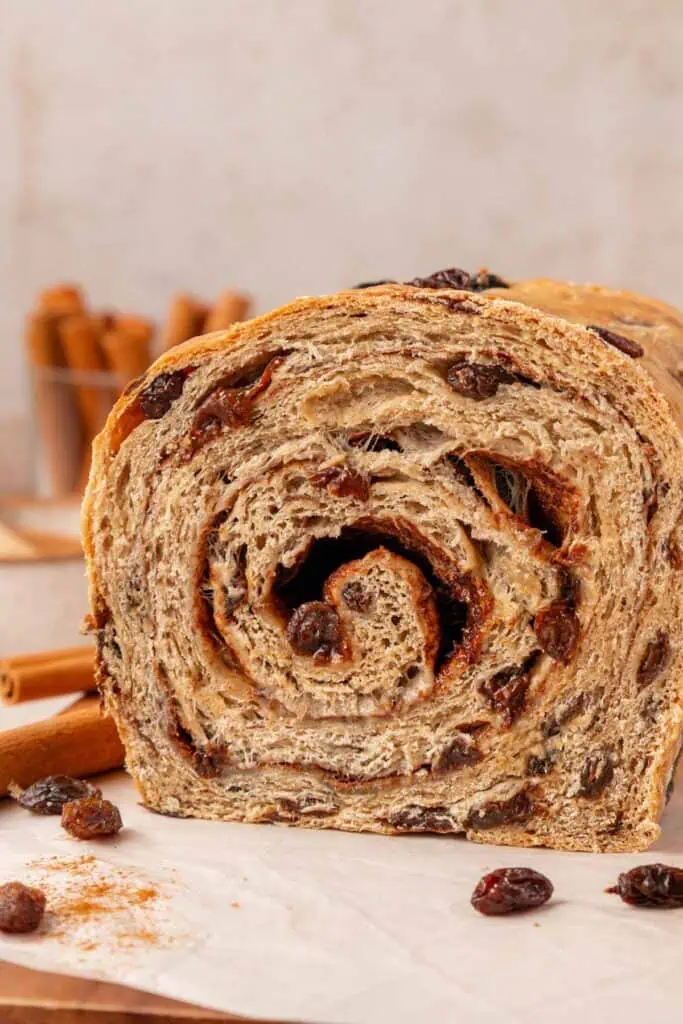
Starting from the short side, roll the dough up tightly into a log. Rolling tightly is key here—it helps create that defined swirl instead of large air pockets. Tuck the ends under and place the loaf seam-side down into a greased loaf pan.
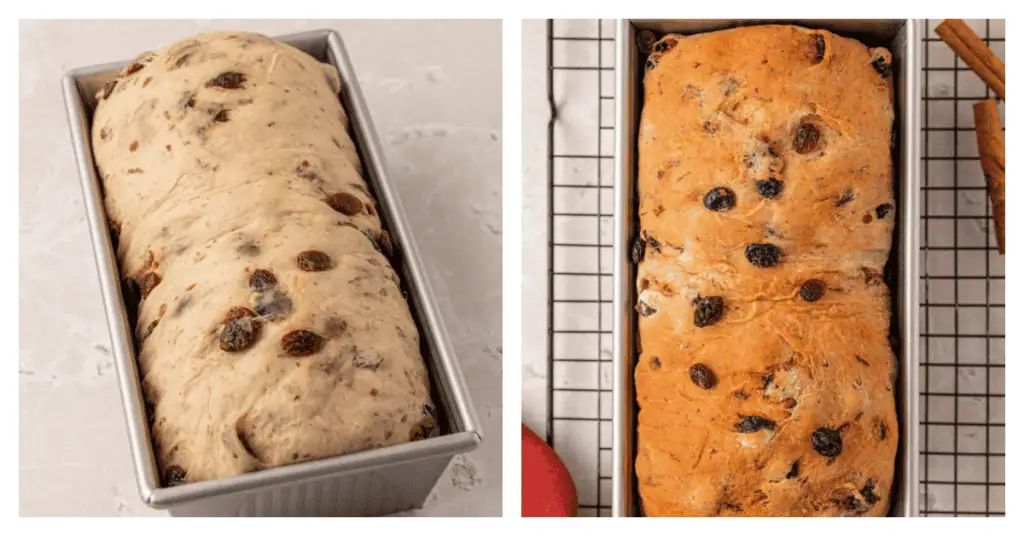
Cover and let the dough rise again until it’s slightly above the top of the pan and springs back gently when pressed. This second rise ensures the bread is light and fluffy instead of dense.
Bake at 350°F until the loaf is golden brown and the internal temperature reaches about 190°F. This ensures the bread is fully baked through without being dry.
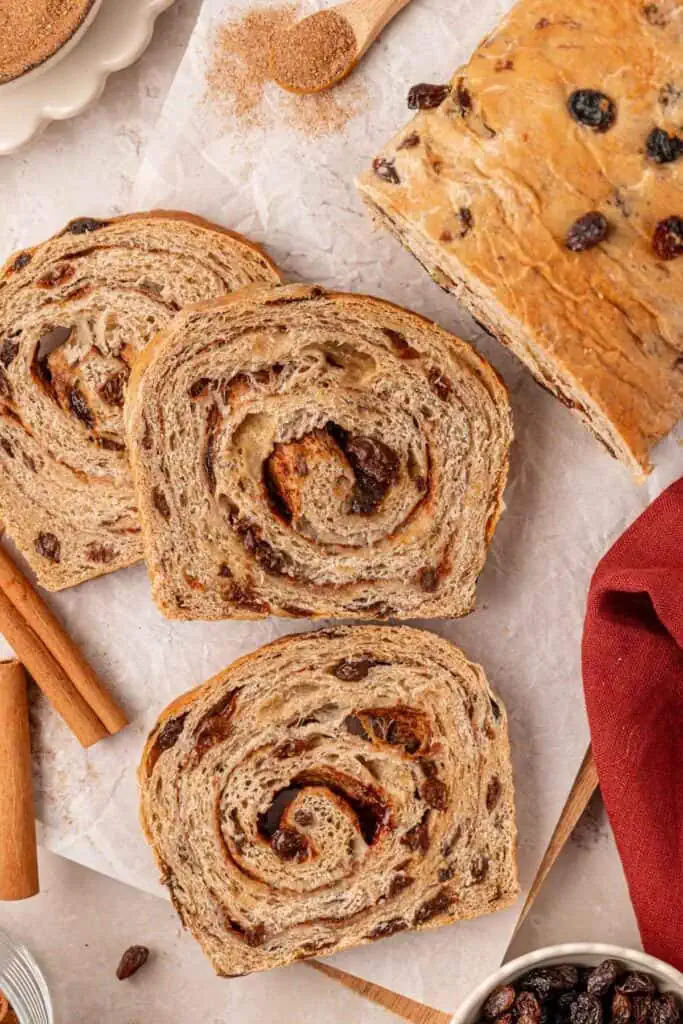
Let the bread cool in the pan for about 10 minutes, then transfer it to a wire rack to cool completely. It’s important to let it cool fully before slicing—cutting too soon can cause the texture to become gummy.
Troubleshooting Cinnamon Raisin Bread
If your bread didn’t turn out quite right, here are a few common issues and how to fix them.
- Swirl has gaps or separates when sliced: This usually happens if the dough wasn’t rolled tightly enough or if the filling didn’t stick. Be sure to brush the dough with egg white and roll the dough snugly to help the layers adhere.
- Bread is dense instead of soft and fluffy: This often means the dough didn’t rise long enough. Make sure it has fully doubled during the first rise and is properly proofed before baking. A cool kitchen can slow things down, so give it extra time if needed.
- Raisins are dry or tough: If you skip soaking the raisins, they can pull moisture from the dough. Always soak and blot them dry before mixing in.
- Loaf didn’t rise much in the pan: This can happen if the yeast is inactive or the dough didn’t have enough time for the second rise. The dough should be slightly above the edge of the pan before baking.
- Top browns too quickly: If the loaf is getting too dark before it’s fully baked, loosely tent it with foil for the remaining bake time.
- Bread is gummy inside: This is usually from slicing too early or underbaking. Let the bread cool completely and check that the internal temperature reaches about 190°F before removing from the oven.
Storage
Store the bread covered at room temperature for up to 3 days. Because it’s a soft sandwich-style bread, keeping it well wrapped helps prevent it from drying out.
You can also freeze baked bread. Once completely cooled, slice the loaf and store in a freezer-safe bag or container for up to 3 months. Slicing before freezing makes it easy to grab individual pieces as needed.
To freeze the dough, complete the first rise, then shape the loaf and place it into the pan. Freeze until solid, then wrap well. Be sure to label with the recipe name and baking instructions so it’s easy to use later.
When ready to bake, let the dough thaw and complete its second rise at room temperature until fully puffed. Then bake as directed. If baking from cold, you may need to add a few extra minutes to the bake time, and you can lower the oven temperature slightly by about 25°F if the top is browning too quickly.
More Recipes To Try
If you’re craving more homemade bread recipes, try my no knead brioche recipe. It makes for a great French toast!
I also love my classic sandwich bread recipe and whole wheat sandwich bread recipe.
Cinnamon Raisin Bread
Ingredients
For the raisins:
- 1 ½ cup raisins
- 1 cup boiling water
For the dough:
- 3 ½ – 3 ¾ cups (420-450 g) bread flour (or all-purpose flour)
- 2 Tablespoons sugar
- 2 ¼ teaspoons instant yeast
- 1 ¼ teaspoons salt
- ½ cup (120 ml) milk warmed
- ¾ cup (180 ml) water warmed
- 4 Tablespoons (57 g) unsalted butter, melted (or vegetable oil)
For the cinnamon swirl:
- ¼ cup (50 g) granulated sugar
- 2 teaspoons cinnamon
- 1 egg white beaten slightly
Instructions
- Add raisins to a measuring cup or bowl of water. Let sit for 5 minutes. Drain and let cool. Blot dry. 1 ½ cup raisins 1 cup boiling water
- In a large bowl, stir together the flour, sugar, yeast and salt. You can do this in a stand mixer with a paddle attachment or in a large bowl with a whisk. 3 ½ – 3 ¾ cups (420-450 g) bread flour (or all-purpose flour) 2 Tablespoons sugar 2 ¼ teaspoons instant yeast 1 ¼ teaspoons salt
- Stir in the milk, water, and butter (or oil) until a shaggy dough forms. Stir in raisins. ½ cup (120 ml) milk ¾ cup (180 ml) water 4 Tablespoons (57 g) unsalted butter,
- Switching to your dough hook attachment knead dough (start out with the mixer on low until the flour has been incorporated then increase speed to medium until smooth and the dough comes away from the bowl, about 6-8 minutes until a smooth, slightly sticky dough forms and comes away from the sides of the bowl. You can also do this by hand on a lightly floured surface. Knead dough by hand for 8-10 minutes.
- Place dough in a lightly greased bowl, turning once to coat. Cover with a clean tea towel or plastic wrap. Allow to rise until doubled in bulk, about 45 minutes to 1 hour.
- Punch dough down gently. Remove the dough from the bowl and place onto a lightly floured counter.
- Roll out the dough to about a rectangle, about 8 by 20 inches. Then brush the surface with the beaten egg. Sprinkle on the sugar and cinnamon, leaving a 1-inch border at one short edge uncovered. ¼ cup (50 g) granulated sugar 2 teaspoons cinnamon 1 egg white
- Starting at the short edge that is covered in filling, roll up tightly into a log. Tuck the ends under and place into an oiled 8 ½”x 4 ½” inch loaf pan, seam side down. Allow to rise for 45 minutes (to 1 hour depending on kitchen temperature) dough should bounce back when touched, and be slightly higher than the pan (about 1 inch higher). Near end of the rising time, preheat the oven to 350°F.
- Bake at 350°F (175°C) for 30-40 minutes until golden brown on top and internal temperature reads 190°F. Remove from the oven and cool in the pan for 10 minutes, then remove fraom the pan and cool completely on a wire cooling rack.
Notes
- Storage: Store the bread covered at room temperature for up to 3 days. Because it’s a soft sandwich-style bread, keeping it well wrapped helps prevent it from drying out. You can also freeze baked bread. Once completely cooled, slice the loaf and store in a freezer-safe bag or container for up to 3 months. Slicing before freezing makes it easy to grab individual pieces as needed.
- Freezing: To freeze the dough, complete the first rise, then shape the loaf and place it into the pan. Freeze until solid, then wrap well. Be sure to label with the recipe name and baking instructions so it’s easy to use later. When ready to bake, let the dough thaw and complete its second rise at room temperature until fully puffed. Then bake as directed. If baking from cold, you may need to add a few extra minutes to the bake time, and you can lower the oven temperature slightly by about 25°F if the top is browning too quickly.